
Introduction
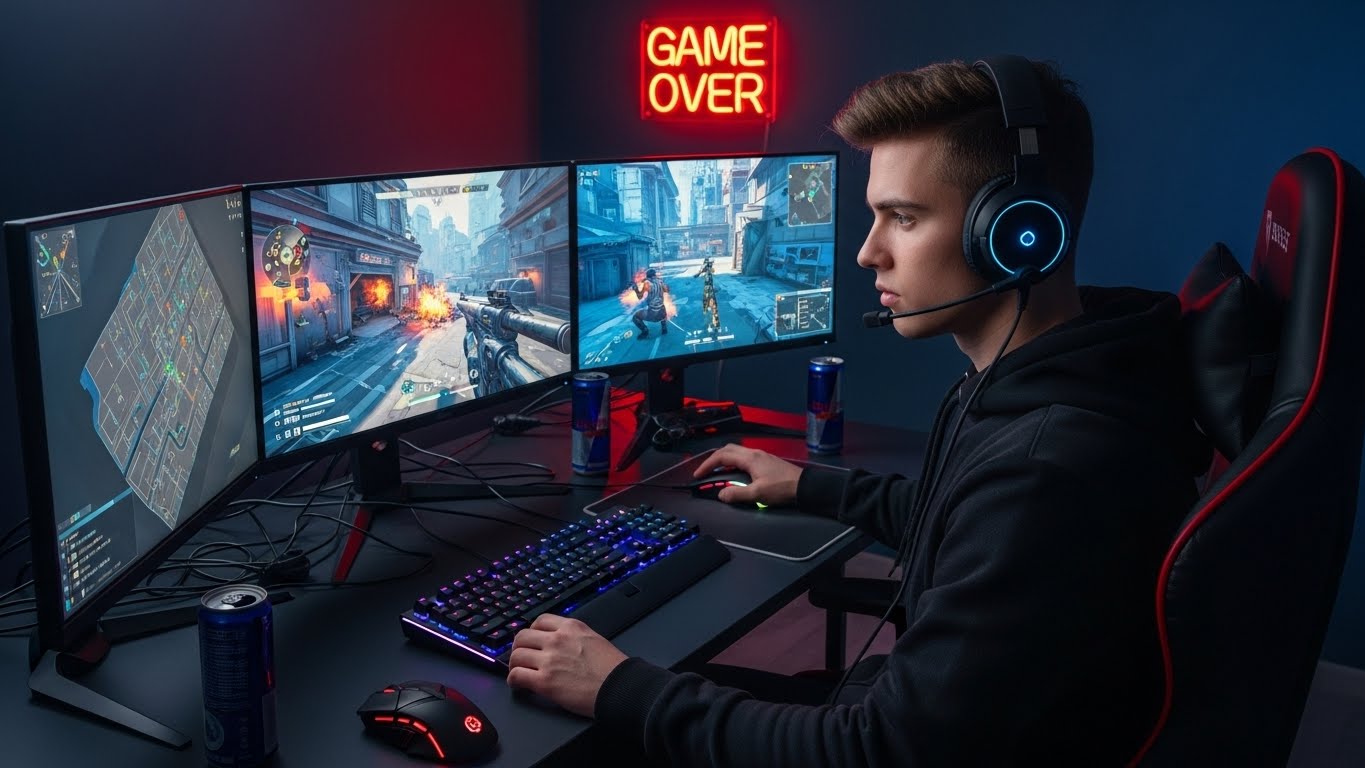
Gaming has become one of the most powerful forms of entertainment in the modern world. It has grown beyond being just a hobby or pastime and now stands as a global industry that influences technology, culture, education, and even mental health. What once started as simple pixelated adventures on old consoles has evolved into massive virtual worlds filled with lifelike graphics, deep storytelling, and real-time multiplayer experiences. Gaming is not only about playing anymore; it is about creating, connecting, and experiencing new realities. The evolution of gaming represents the evolution of human imagination itself.
The Origins of Gaming: From Pixels to Powerhouses
The story of gaming began in the mid-20th century, when engineers created simple electronic games as experiments. Games like Pong and Space Invaders brought joy and excitement to millions, marking the beginning of a new digital era. In the 1980s and 1990s, consoles like the Nintendo Entertainment System and Sega Genesis brought gaming into homes across the world. Iconic characters such as Mario, Sonic, and Link became household names and defined generations of players.
During this period, gaming was primarily about fun and challenge. Players had to rely on skill, patience, and quick reflexes to conquer levels. However, these early games also sparked creativity, inspiring people to imagine new worlds and possibilities. As technology improved, so did the ambition of developers. By the 2000s, gaming had moved into three-dimensional worlds, opening the door for deeper storytelling and emotional engagement.
The Technological Revolution: Powering the Modern Gaming Era
The rise of advanced technology has completely transformed gaming into an immersive experience. High-definition graphics, realistic sound design, and faster processing power allow developers to create worlds that feel alive. Modern consoles and gaming PCs deliver cinematic visuals, dynamic lighting, and lifelike physics.
Game engines such as Unreal and Unity have revolutionized game design by giving developers the tools to build massive, detailed environments. Cloud technology and digital downloads have replaced physical cartridges and discs, making games more accessible than ever. Players can now experience games on multiple devices—computers, consoles, tablets, and smartphones—anytime, anywhere.
Artificial intelligence has also played a major role in modern gaming. Enemies can adapt to player behavior, and non-playable characters now act intelligently, making games feel more realistic. The combination of technology and creativity has transformed gaming from a simple pastime into an art form.
The Social Revolution: How Online Gaming Connects the World
The introduction of online gaming changed the landscape forever. Instead of playing alone, people could now connect with others across the world. This created communities, friendships, and even professional teams. Games like Counter-Strike, World of Warcraft, and later Fortnite became cultural phenomena, bringing millions of players together.
Online gaming is not just about competition—it is also about connection. Players collaborate, communicate, and build relationships in virtual worlds. Voice chat, guilds, and online forums allow players to share experiences and strategies. For many, gaming communities are a source of belonging and friendship.
The social aspect of gaming has also expanded through live streaming and content creation. Players can now broadcast their gameplay to global audiences, creating entertainment for millions of viewers. This rise of gaming influencers and streamers has turned gaming into both a lifestyle and a career path.
Esports: Where Gaming Meets Professional Competition
Esports, or electronic sports, represents the pinnacle of competitive gaming. What once was a casual activity is now a billion-dollar industry with professional players, coaches, analysts, and massive tournaments. Games like League of Legends, Dota 2, and Valorant have become global spectacles, with teams competing for fame and million-dollar prize pools.
Professional gamers train rigorously, often practicing for hours every day to perfect their reflexes and strategies. Esports events fill stadiums and attract online audiences in the millions, rivaling traditional sports in popularity. The growth of esports has also created career opportunities in broadcasting, event management, and marketing.
Esports has proven that gaming is not just play—it is skill, dedication, and teamwork at the highest level. It also highlights how digital entertainment can unite people across countries and cultures through shared passion and competition.
The Art of Storytelling in Games
Gaming has evolved into one of the most powerful storytelling mediums of the modern age. Unlike films or books, games allow players to be active participants in the narrative. The choices players make can shape the outcome, giving a sense of agency and emotional investment.
Games like The Witcher, Red Dead Redemption, and The Last of Us have proven that storytelling in gaming can rival that of any movie or novel. Through realistic dialogue, strong character development, and emotional depth, players experience stories that resonate on a personal level.
Game writers and designers now work hand in hand to create experiences that blend gameplay with narrative. The emotional power of gaming lies in its interactivity—players do not just watch a story unfold; they live it.
Virtual Reality and Augmented Reality: The Future of Immersion
Virtual Reality (VR) and Augmented Reality (AR) have brought gaming into an entirely new dimension. VR headsets transport players into lifelike digital environments where they can explore, interact, and experience the game from a first-person perspective. This technology creates an unprecedented sense of immersion and realism.
Augmented Reality, on the other hand, blends the digital and physical worlds. It overlays virtual elements onto the real world through mobile devices or smart glasses. Games that use AR encourage players to explore their surroundings while interacting with digital content, creating new ways to play and connect with others.
These technologies are still developing, but they hold incredible potential for the future of gaming. They promise not only entertainment but also practical applications in education, training, and therapy.
The Positive Impact of Gaming on Learning and Skill Development
Gaming is often misunderstood as a distraction, but research shows that it can enhance learning and cognitive skills. Strategy and puzzle games improve problem-solving and critical thinking. Action games boost hand-eye coordination and reaction time. Simulation games teach management, planning, and decision-making.
Educational games are being used in classrooms to make learning more interactive. They help students engage with difficult subjects by turning lessons into challenges and adventures. Many universities now study game design and development as academic disciplines, recognizing the industry’s creative and economic importance.
Moreover, games can foster teamwork and leadership. Multiplayer games often require communication and cooperation, skills that are valuable in real-world environments. When approached responsibly, gaming becomes a tool for growth rather than distraction.
Challenges and Ethical Considerations in Gaming
While gaming offers many benefits, it also comes with challenges. Game addiction, cyberbullying, and exposure to violent content have raised concerns among parents and educators. It is important for players to maintain balance and for developers to promote healthy gaming habits.
Ethical considerations also extend to inclusivity and representation. The industry is becoming more aware of the need for diverse characters and stories that reflect different cultures and identities. Accessibility is another major focus, as developers work to make games playable for people with disabilities through adaptive technologies.
The key to the future of gaming lies in responsible innovation—creating experiences that entertain while respecting the well-being of players.
The Business of Gaming: A Global Economic Powerhouse
The gaming industry is now one of the largest entertainment sectors in the world, surpassing both music and film. It generates billions of dollars annually through console sales, in-game purchases, mobile apps, and esports sponsorships. Game development studios, independent creators, and tech companies are all contributing to a thriving digital economy.
Mobile gaming has made games accessible to billions of people. The rise of digital distribution platforms has also allowed small developers to reach global audiences without the need for massive budgets. This democratization of gaming has encouraged creativity and diversity in game design.
As technology continues to evolve, new opportunities will arise through artificial intelligence, virtual economies, and blockchain-based gaming systems. The business of gaming is not just about entertainment—it is about shaping the future of digital interaction.
The Future of Gaming: Infinite Horizons Ahead
The future of gaming promises even greater innovation and creativity. Cloud gaming will make high-quality games available on any device, removing the need for expensive hardware. Artificial intelligence will create personalized experiences that adapt to each player’s behavior and preferences.
The idea of the metaverse—shared virtual spaces where people can play, work, and socialize—may become reality. In this vision, gaming will merge with other digital experiences to create interconnected worlds that redefine human interaction.
Moreover, as technology becomes more advanced, the boundaries between the digital and physical worlds will continue to blur. Gaming will not only entertain but also educate, heal, and inspire.
Conclusion
Gaming has come a long way from its humble beginnings as simple pixelated fun. It has evolved into an industry that influences technology, art, culture, and communication. It brings people together, challenges their minds, and opens doors to new possibilities.
From virtual reality to esports, gaming continues to push the boundaries of what humans can create and experience. It is a reflection of imagination, innovation, and connection. The virtual worlds we explore today are shaping the real world of tomorrow.
Gaming is more than entertainment—it is a revolution of creativity and collaboration. It teaches us to think, adapt, and dream. As technology advances, gaming will continue to lead the way, showing us that in the realm of imagination, there are no limits. The future of gaming is bright, boundless, and only just beginning