
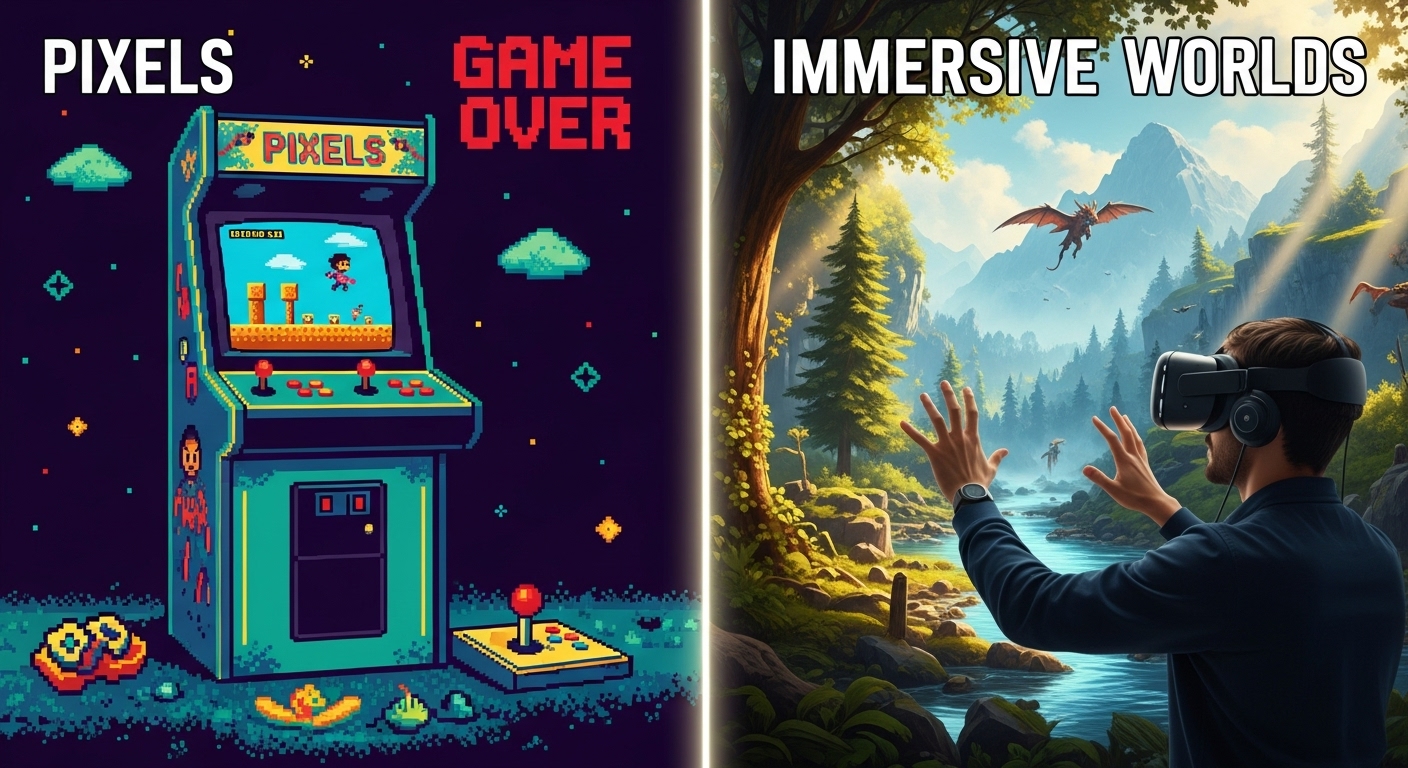
Introduction: The World Built by Games
Gaming has become far more than a hobby—it’s a cultural force, an art form, and an industry that influences millions across the globe. What began as simple blips on a screen has transformed into vast virtual worlds filled with creativity, competition, and connection. The story of gaming is a story of innovation, imagination, and human connection. It reflects how technology has evolved, how people have adapted to it, and how digital worlds have become integral to the way we live, play, and even learn.
From the earliest arcade cabinets to immersive virtual reality experiences, gaming’s journey is filled with milestones that redefined entertainment and reshaped modern culture. The industry today generates billions in revenue, commands massive audiences, and continues to push technological boundaries. Yet beyond the numbers lies a deeper story—one of passion, community, and creativity that has united players across generations.
The Birth of Gaming: A Humble Beginning
The first video games were not created for entertainment. They were experiments in programming and human-computer interaction. In the 1950s and 60s, researchers developed simple games like “Tennis for Two” and “Spacewar!” as demonstrations of what computers could do. These creations laid the foundation for what would become a global phenomenon.
The 1970s marked the commercial birth of gaming. Arcade machines became the first major step in bringing video games to the public. Titles like “Pong,” “Space Invaders,” and “Pac-Man” captivated players, introducing the idea of competing for high scores and challenging friends. These games were simple, yet addictive, built around easy-to-learn mechanics that anyone could pick up. The glowing screens and the sounds of 8-bit tunes filled arcades around the world, transforming gaming into a social experience.
Home consoles soon followed. The release of systems like the Atari 2600 brought video games into living rooms. Families could now play together, and children could explore digital adventures without leaving home. This period established gaming as a part of everyday entertainment, no longer confined to arcades or laboratories.
The Golden Age: Creativity and Expansion
The 1980s were a defining era. The games became more sophisticated, offering deeper stories, richer graphics, and varied genres. Developers experimented with side-scrolling adventures, puzzle-solving challenges, and action-packed experiences. Iconic franchises like “Super Mario,” “The Legend of Zelda,” and “Final Fantasy” emerged, setting standards that still influence design today.
Nintendo’s rise during this decade was monumental. The company’s approach to storytelling, innovation, and character design created beloved icons and introduced gameplay mechanics that remain timeless. Meanwhile, Sega brought its own unique style, offering faster-paced experiences and rivaling Nintendo’s dominance. The friendly competition between these companies spurred creativity across the entire industry.
Personal computers also entered the gaming scene, expanding possibilities even further. PC gaming introduced genres like real-time strategy, simulation, and role-playing with complex systems. Players could customize their experiences, mod games, and even create their own content. This freedom helped form the early roots of online communities, where fans shared their creations and discussed their favorite titles.
The Fall and the Rebirth
No industry evolves without challenges. The early 1980s also witnessed the infamous video game crash of 1983, caused by market oversaturation, poor-quality titles, and declining consumer trust. For a time, it seemed gaming might fade into history as a short-lived trend.
But innovation revived it. The release of the Nintendo Entertainment System (NES) in 1985 breathed new life into gaming. Nintendo emphasized quality control, memorable characters, and engaging gameplay. This approach restored faith in the medium, leading to a renaissance that cemented gaming as a permanent cultural fixture.
This period also marked the emergence of global gaming icons. Mario, Link, Samus, and others became household names. Games were no longer just diversions—they were stories, challenges, and experiences that sparked imagination. Players began to see games as something more: interactive art.
The 3D Revolution: Stepping into New Dimensions
The 1990s ushered in a technological leap that would change everything: the shift to 3D graphics. Consoles like the PlayStation, Nintendo 64, and Sega Saturn introduced players to new forms of immersion. Worlds were no longer flat—they had depth, movement, and realism. Suddenly, players could explore expansive environments and experience freedom unlike anything before.
This revolution also brought cinematic storytelling to games. Titles like “Metal Gear Solid,” “Final Fantasy VII,” and “The Legend of Zelda: Ocarina of Time” introduced emotional narratives, voice acting, and film-like direction. Developers began to see games as a medium capable of evoking genuine emotion, not just entertainment.
Online connectivity started to take shape during this time as well. The rise of the internet allowed players to compete and cooperate globally. Early online games and local area network battles hinted at what would soon become one of gaming’s greatest frontiers—multiplayer universes that connected millions.
The Rise of the Modern Era: Online Worlds and Communities
By the 2000s, gaming had fully entered mainstream culture. The internet became a vital part of gaming, and online multiplayer transformed how people played and interacted. Games like “Counter-Strike,” “World of Warcraft,” and “Halo” turned playing with friends from a local activity into a global experience. Gamers formed clans, teams, and digital communities that spanned continents.
This era also saw massive growth in competitive gaming. What began as informal tournaments evolved into organized esports, complete with professional players, sponsorships, and global championships. Games like “StarCraft,” “League of Legends,” and “Dota 2” built enormous audiences, with fans watching competitions the same way others watched sports. The passion, skill, and strategy of these games demonstrated that gaming was more than play—it was performance.
Meanwhile, storytelling in games reached new heights. Titles like “Mass Effect,” “The Elder Scrolls,” and “The Last of Us” combined complex narratives with player choice, making the player an active participant in shaping the story. The boundaries between film, literature, and gaming blurred, creating a new form of artistic expression.
Indie Games and the Return of Creativity
As major studios pursued larger and more cinematic productions, independent developers began crafting smaller, experimental games that focused on innovation and emotion. The rise of digital distribution platforms allowed creators to share their work directly with players, bypassing traditional publishers. This democratization of game development led to a renaissance of creativity.
Indie games like “Undertale,” “Celeste,” “Hollow Knight,” and “Stardew Valley” showed that you didn’t need massive budgets to create memorable experiences. They focused on storytelling, atmosphere, and emotional depth, proving that heart and creativity could resonate as strongly as high-end graphics.
This movement also inspired new generations of developers. The accessibility of tools and engines allowed anyone with a vision to build something. Players connected with these games on a personal level because they felt authentic and passionate. Indie gaming became a celebration of imagination over corporate polish, and it remains a vital part of the industry’s diversity.
Gaming as Culture and Lifestyle
Today, gaming is a lifestyle. It influences fashion, music, film, and even social trends. Streamers and content creators have become celebrities, building communities through platforms that allow players to share their experiences live. Watching games is now as common as playing them, with millions tuning in daily to witness others compete, create, or explore.
The aesthetics of gaming have also entered mainstream culture. Game-inspired music, design, and storytelling appear everywhere from advertisements to cinema. The language of gaming—terms like “level up,” “spawn,” or “quest”—has entered everyday speech, reflecting how deeply embedded it has become in modern life.
Moreover, gaming has become a powerful tool for connection. Multiplayer titles and virtual worlds have given people places to meet, collaborate, and form friendships. In times of isolation, these spaces offer belonging and shared adventure. Gaming communities are diverse, crossing age, gender, and geography. It’s one of the few mediums where people of all backgrounds can unite through play.
Technology and the Next Frontier
The technology behind gaming continues to evolve at breathtaking speed. Graphics are approaching photorealism, and artificial intelligence is creating dynamic worlds that respond intelligently to players. Virtual reality and augmented reality are redefining immersion, allowing players to step directly into their games rather than just observe them.
Cloud gaming has begun to reshape access, letting people play high-end games without expensive hardware. Streaming services make gaming more inclusive, removing barriers and expanding reach. This accessibility ensures that gaming will continue to grow as a universal pastime.
AI-driven storytelling is another fascinating frontier. Games can now adapt to individual players, shaping narratives based on decisions, behaviors, and emotions. This interactivity deepens immersion, making every experience unique.
Even beyond entertainment, gaming technology influences other fields. Simulations train pilots and surgeons, gamification enhances education and business, and virtual worlds provide therapeutic experiences for mental health. The principles of play are now applied across society, showing the transformative power of game design beyond the console.
The Social and Psychological Impact of Gaming
Gaming has often been misunderstood, sometimes criticized for its effects on behavior. But modern research paints a more nuanced picture. Games can enhance cognitive skills, problem-solving, teamwork, and creativity. They teach persistence, adaptability, and strategic thinking. For many, gaming provides stress relief, social connection, and even a sense of purpose.
Of course, balance remains important. Like any form of entertainment, gaming can become unhealthy if excessive. Yet when approached mindfully, it fosters valuable life skills. Cooperative gameplay builds empathy and communication. Competitive gaming teaches discipline and focus. Story-driven experiences encourage emotional intelligence and reflection.
The communities built through games have also proven incredibly resilient and supportive. Players rally around causes, raise money for charity, and offer friendship to those who may feel isolated in the real world. In this way, gaming becomes not just an escape, but a bridge—a digital realm that helps people connect meaningfully.
The Art of Storytelling in Games
Storytelling in games has evolved from simple objectives into complex, emotionally charged narratives. Developers use interactive storytelling to immerse players in worlds where every decision matters. Unlike passive media, games empower players to shape the outcome, making each journey personal.
This interactivity transforms storytelling into a dialogue between creator and player. A well-designed game tells its story through gameplay, art, sound, and environment, not just dialogue. The emotional resonance comes from participation—the feeling of living the story rather than just witnessing it.
Games like “Red Dead Redemption 2,” “God of War,” and “Journey” demonstrate the power of this medium. They explore loss, redemption, love, and sacrifice through player experience. As technology advances, storytelling in games will continue to evolve, pushing artistic boundaries further than ever before.
The Business of Gaming: A Global Powerhouse
What began as a niche industry is now one of the largest entertainment sectors in the world. Gaming generates more revenue than film and music combined. Major releases attract global attention, and player bases number in the hundreds of millions. Companies invest billions in development, marketing, and technology to meet the ever-growing demand.
Esports and streaming have opened entirely new economies. Players become professionals, teams form organizations, and tournaments draw audiences that rival major sports events. Merchandise, sponsorships, and digital economies thrive within these ecosystems, showcasing gaming’s vast reach.
Mobile gaming, in particular, has democratized access. Smartphones turned nearly everyone into a potential gamer, from children playing casual puzzles to adults enjoying strategy games on the go. This accessibility ensures gaming remains one of the most inclusive and far-reaching forms of entertainment.
Challenges and Responsibilities
Despite its achievements, gaming faces challenges. Issues like toxic behavior, addiction, privacy concerns, and representation remain topics of discussion. The industry’s rapid growth has exposed gaps in regulation, inclusivity, and ethics. Developers and communities alike must continue addressing these challenges to ensure gaming remains positive and empowering.
Representation and diversity have become central topics. Games now feature broader stories and characters that reflect the diversity of the real world. This inclusivity enriches narratives and helps players feel seen and valued. Developers are increasingly aware that gaming’s strength lies in its global audience, and every voice matters.
The environmental impact of gaming technology, including hardware production and energy consumption, is another area of concern. Companies are beginning to explore sustainable solutions, from energy-efficient systems to digital-only releases. As the industry matures, responsibility and innovation must go hand in hand.
The Future of Gaming: Boundless Horizons
Looking ahead, the possibilities are endless. As technology and creativity merge, gaming will continue to blur the line between reality and imagination. Artificial intelligence, virtual reality, and metaverse concepts will redefine how players interact with digital spaces.
Games will become more personalized, more intelligent, and more emotionally responsive. The future may bring experiences that adapt not just to choices but to mood, behavior, and real-world context. The boundaries between game and life may continue to fade as interactive experiences integrate with daily living.
Education, communication, and work will also draw from gaming principles. Virtual environments can enhance learning, teamwork, and innovation. The spirit of play will remain a driving force in how society evolves alongside technology.
Conclusion: More Than Just Play
Gaming is more than entertainment—it’s a reflection of human creativity and connection. It combines art, technology, and storytelling into an experience that inspires, challenges, and unites. From its humble origins in pixelated simplicity to today’s breathtaking virtual worlds, gaming has grown into a cultural cornerstone that shapes how people think, feel, and connect.
Every generation of gamers carries the legacy forward. The children who grew up with 8-bit adventures now design the worlds of tomorrow. The friendships formed through online games span borders and languages. The lessons learned through play influence real-world creativity and collaboration.
In the end, gaming’s greatest achievement is not its technology or profits—it’s its ability to bring people together. Whether in the glow of an arcade screen, the quiet of a solo adventure, or the chaos of an online battle, gaming continues to remind us of one timeless truth: we play not just to escape reality, but to explore what it means to be human.