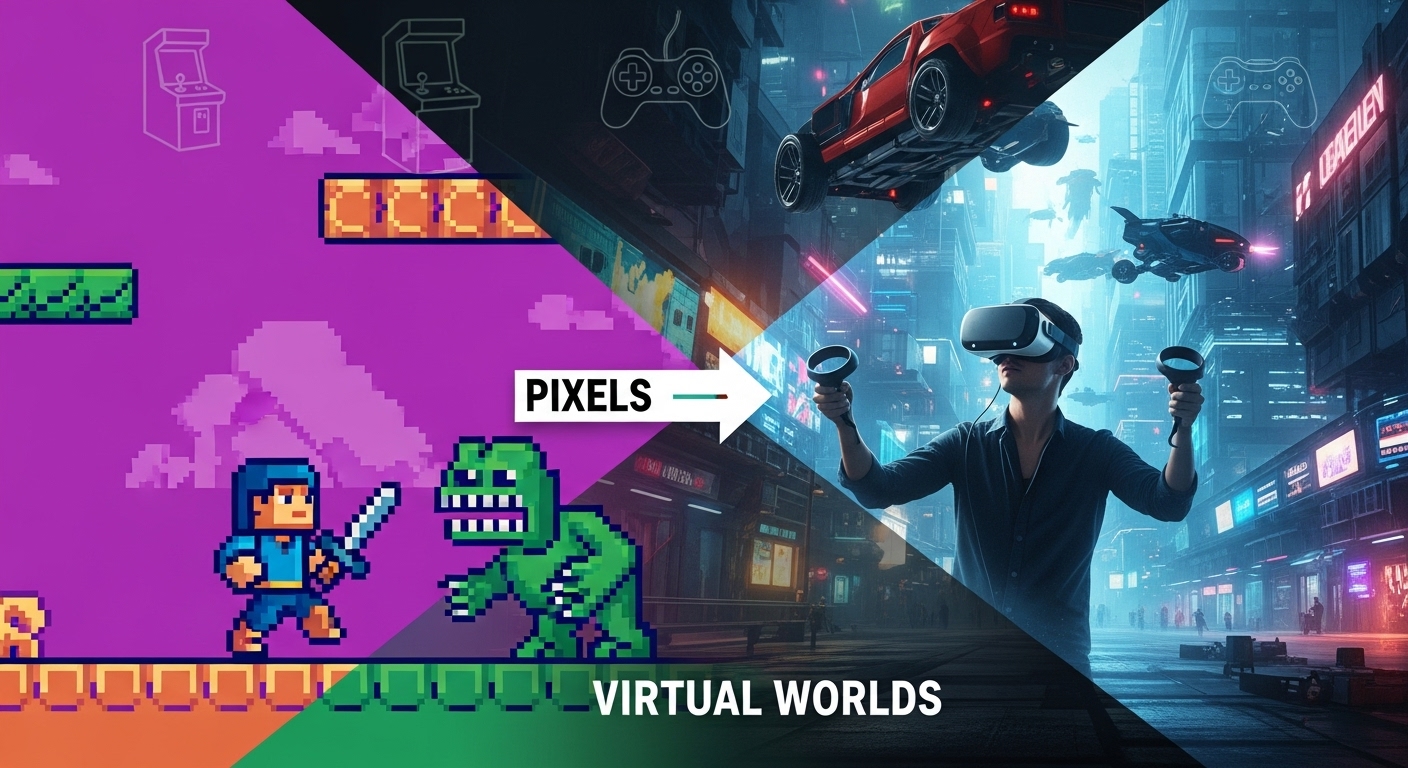
Gaming has come a long way from the days of simple pixelated screens and joystick controls. What was once seen as a pastime for children or hobbyists has now evolved into a massive cultural and technological phenomenon that spans across all ages, professions, and continents. The modern gaming industry is an empire worth billions, influencing not only entertainment but also education, art, social connection, and even mental health awareness. The journey from classic arcade machines to virtual reality headsets tells a story of innovation, community, and limitless imagination.
The Birth of Gaming: Where It All Began
The origins of gaming trace back to the early 1950s and 60s when scientists and computer engineers began experimenting with simple digital games as demonstrations of programming and computing power. One of the earliest known examples, “Tennis for Two,” developed in 1958, was played on an oscilloscope screen. Later came “Spacewar!” in the 1960s, a game that inspired countless developers and birthed the idea of interactive entertainment. The 1970s saw the dawn of the commercial gaming industry with the release of “Pong,” a simple table tennis simulation that captivated arcades around the world. Soon after, home consoles like the Magnavox Odyssey brought gaming into living rooms for the first time, creating a foundation for what would become a global revolution.
The Rise of Consoles and the Golden Age of Arcades
The late 1970s and 1980s marked what many call the golden age of arcade gaming. Games like Pac-Man, Space Invaders, and Donkey Kong became cultural icons, drawing people of all ages into brightly lit arcades filled with flashing lights and electronic sounds. It wasn’t just about competition; it was about community. Players gathered to challenge each other, share strategies, and celebrate high scores. Meanwhile, home consoles like the Atari 2600 brought gaming into households, giving people the ability to experience interactive entertainment without leaving their homes. However, the gaming industry faced a massive crash in 1983 due to oversaturation and poor-quality games flooding the market. Many believed gaming would fade into obscurity, but it was only the beginning of a new era.
The Nintendo Revolution and the Birth of Icons
In 1985, Nintendo changed the course of gaming history with the release of the Nintendo Entertainment System (NES). With beloved titles such as Super Mario Bros, The Legend of Zelda, and Metroid, Nintendo introduced a level of creativity, storytelling, and polish that reignited public interest. The company’s mascot, Mario, became a global symbol of gaming excellence. Sega soon entered the competition with its Genesis console, bringing a more edgy and fast-paced alternative with Sonic the Hedgehog. The rivalry between Nintendo and Sega defined the 1990s and pushed developers to innovate rapidly. These years also saw the rise of handheld gaming with devices like the Game Boy, allowing players to enjoy their favorite games on the go.
The Leap to 3D and the Expansion of Imagination
As the 1990s progressed, technology advanced rapidly. The introduction of 3D graphics changed everything. Games were no longer confined to flat, two-dimensional environments; they could now offer fully immersive worlds to explore. Sony entered the scene with the PlayStation, offering a library of visually stunning titles that appealed to an older audience. Games like Final Fantasy VII, Metal Gear Solid, and Resident Evil revolutionized storytelling and cinematic presentation in gaming. Meanwhile, Nintendo responded with the Nintendo 64, featuring groundbreaking titles such as The Legend of Zelda: Ocarina of Time and Super Mario 64, which set new standards for gameplay design. The industry was no longer just about fun—it had become an art form capable of evoking emotions, telling deep stories, and inspiring creativity.
The Online Revolution and the Birth of Community
The early 2000s brought another monumental shift: the rise of online gaming. With faster internet connections becoming widespread, players could now connect and compete with others across the globe. Games like Counter-Strike, World of Warcraft, and Halo redefined what it meant to play together. Online gaming communities flourished, and esports began to take shape as professional gamers competed in tournaments watched by millions. The concept of multiplayer cooperation and competition became central to the gaming experience. Online games also allowed friendships and rivalries to form across continents, creating a shared global culture built around pixels and passion.
The Expansion of Genres and Creativity
As technology improved, so did the diversity of gaming experiences. Developers began experimenting with genres, blending ideas and mechanics to create entirely new forms of play. Role-playing games (RPGs) became more immersive, first-person shooters more realistic, and open-world adventures more dynamic. Indie developers also rose to prominence, proving that creativity was not limited to big studios. Games like Minecraft, Stardew Valley, and Undertale demonstrated that a good idea and heartfelt design could achieve worldwide success. This democratization of development inspired countless new creators to enter the industry, ensuring a constant flow of innovation and fresh ideas.
Gaming as an Art Form
For decades, skeptics dismissed gaming as mere entertainment, but the narrative began to shift as more developers pushed the boundaries of what games could express. Titles like Journey, The Last of Us, and Shadow of the Colossus challenged the perception of games as mindless fun, showing that they could convey deep emotions and profound messages. From stunning visuals and haunting soundtracks to complex character development and moral dilemmas, gaming proved itself capable of delivering artistic experiences equal to cinema or literature. The interactivity of gaming gives players agency, allowing them to become part of the story rather than passive observers. This sense of participation creates emotional connections that no other medium can fully replicate.
The Rise of Streaming and Content Creation
In the 2010s, gaming took another major leap with the rise of content creation platforms and live streaming. Services like Twitch and YouTube Gaming turned players into entertainers and celebrities. Gamers could share their experiences, skills, and personalities with audiences worldwide. This new form of entertainment blurred the line between playing and watching. Millions tuned in to watch others play, not just for the gameplay itself but for the personalities behind the screen. Content creators built communities centered around humor, commentary, and shared love for games. The rise of esports further elevated gaming’s profile, transforming it into a spectator sport with professional leagues, sponsorships, and massive prize pools.
Mobile Gaming and Accessibility
While console and PC gaming continued to thrive, the introduction of smartphones brought gaming to an even larger audience. Mobile games like Angry Birds, Clash of Clans, and Candy Crush became household names, proving that gaming could be both casual and accessible. Suddenly, everyone from children to grandparents could enjoy quick, engaging games from the palm of their hands. Mobile gaming broke down barriers, making gaming one of the most inclusive forms of entertainment in history. Developers also found creative ways to adapt traditional game genres to mobile platforms, ensuring that the experience could be enjoyed anywhere, anytime.
The Era of Immersive Realities
With the emergence of powerful hardware, gaming entered the age of immersion. Virtual Reality (VR) and Augmented Reality (AR) began to blur the boundaries between the digital and physical worlds. Devices like the Oculus Rift, PlayStation VR, and later, the Meta Quest series allowed players to step inside the game world, interacting with environments in unprecedented ways. Meanwhile, AR games like Pokémon GO transformed real-world locations into playgrounds of exploration and discovery. These innovations opened up new possibilities not only for entertainment but also for education, simulation training, and therapy. Immersive gaming became more than just fun—it became a window into future possibilities.
Gaming as a Social Space
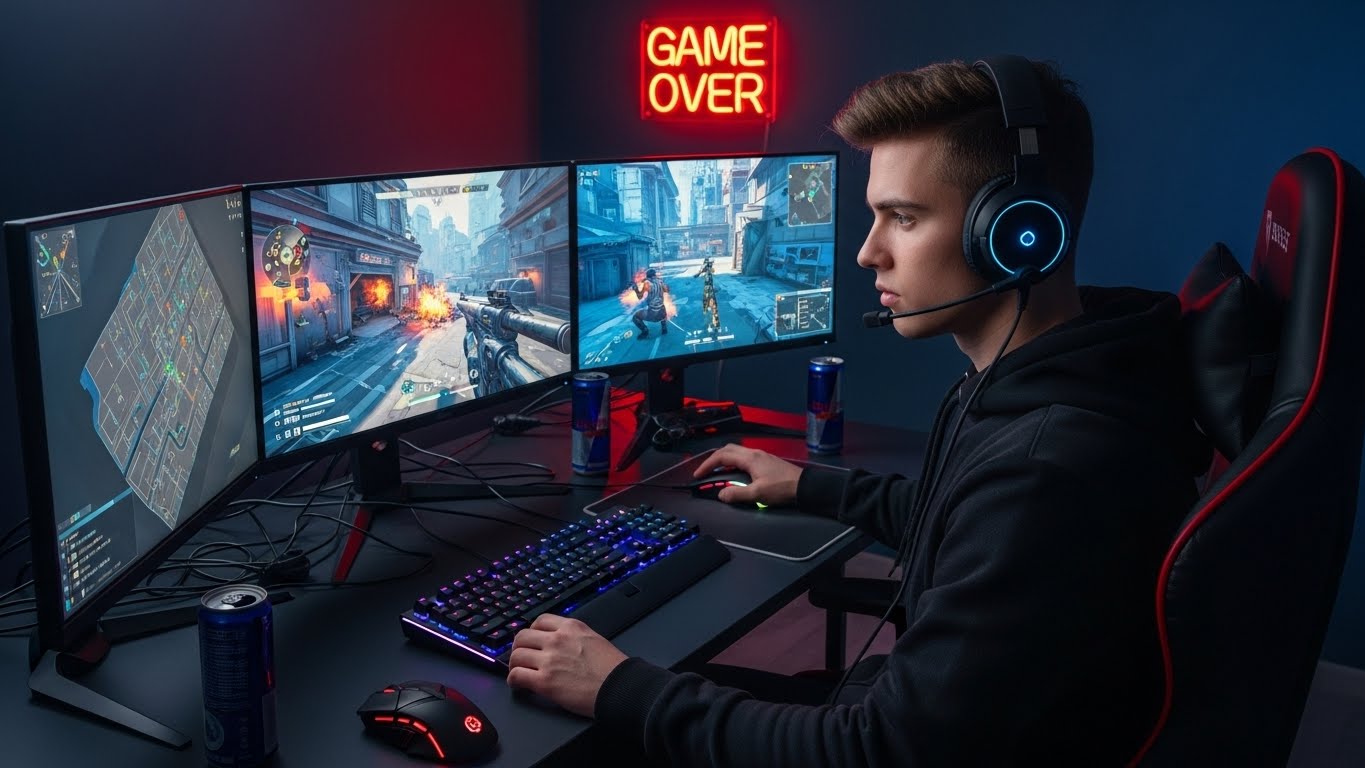
Modern gaming is not just about playing—it’s about connecting. Online multiplayer games like Fortnite, Apex Legends, and Roblox have become digital meeting grounds for millions of players. These platforms allow people to socialize, create, and share experiences in ways that transcend traditional communication. Virtual spaces and customizable avatars give players freedom of expression and identity exploration. For many, gaming has become a form of social life where friendships are formed, collaborations happen, and communities thrive. The social aspect of gaming has become a vital part of its appeal, especially in a world where digital interaction is increasingly common.
The Economic Power of Gaming
The gaming industry today is one of the most profitable sectors in entertainment, surpassing both film and music combined. With blockbuster titles generating billions in revenue, gaming has become a major driver of economic growth and technological innovation. Major franchises like Call of Duty, Grand Theft Auto, and FIFA have become cultural landmarks with dedicated fan bases worldwide. Game development has also created millions of jobs in design, programming, art, sound engineering, and marketing. The rise of digital distribution and subscription services has made games more accessible than ever, while also changing how consumers interact with content.
Gaming and Mental Health
Beyond entertainment, gaming has proven to have meaningful psychological and emotional benefits. Studies have shown that gaming can improve problem-solving skills, coordination, memory, and strategic thinking. Cooperative games can foster teamwork and empathy, while narrative-driven titles allow players to explore emotions and human experiences. For many, gaming provides a safe space to unwind, escape stress, or connect with others. However, it is also important to acknowledge the potential for addiction and excessive use. Responsible gaming and awareness of balance are essential to ensure that games remain a positive influence. Increasingly, developers are addressing mental health topics within their narratives, helping to destigmatize conversations about emotional well-being.
The Future of Gaming: Innovation Without Limits
The future of gaming looks brighter than ever. Advancements in artificial intelligence, cloud technology, and graphics processing promise experiences that were once the stuff of science fiction. Cloud gaming services now allow players to stream high-quality games without expensive hardware, making gaming more inclusive and environmentally efficient. AI is being used to create dynamic worlds that adapt to player choices, offering unique and personalized adventures. As virtual and augmented realities continue to evolve, the line between real and digital worlds will continue to blur. Moreover, gaming is becoming more diverse, with developers from different backgrounds bringing new perspectives and cultural influences to the medium.
The Cultural Impact of Gaming
Gaming has become one of the most influential cultural forces of the 21st century. It has shaped language, music, fashion, and even social values. Game soundtracks are performed in symphonies, characters become global icons, and in-game events attract millions of participants. Gaming conventions, cosplay, and online fan communities highlight the passion and creativity of players worldwide. Moreover, games have become tools for education, training, and artistic expression. They encourage critical thinking, storytelling, and collaboration, making them one of the most dynamic mediums of human creativity.
Conclusion: The Infinite Game
Gaming is more than an activity—it is an evolving cultural ecosystem that continues to shape how we play, learn, and connect. From the blinking pixels of early arcade machines to the breathtaking virtual worlds of today, gaming’s journey is one of innovation, imagination, and shared human experience. Every era has expanded what gaming can mean, transforming it from a niche hobby into a central part of modern life. As technology continues to advance, the only certainty is that gaming will keep evolving, offering new worlds to explore, new stories to tell, and new connections to make. The world of gaming is infinite, and its greatest levels are yet to be unlocked.