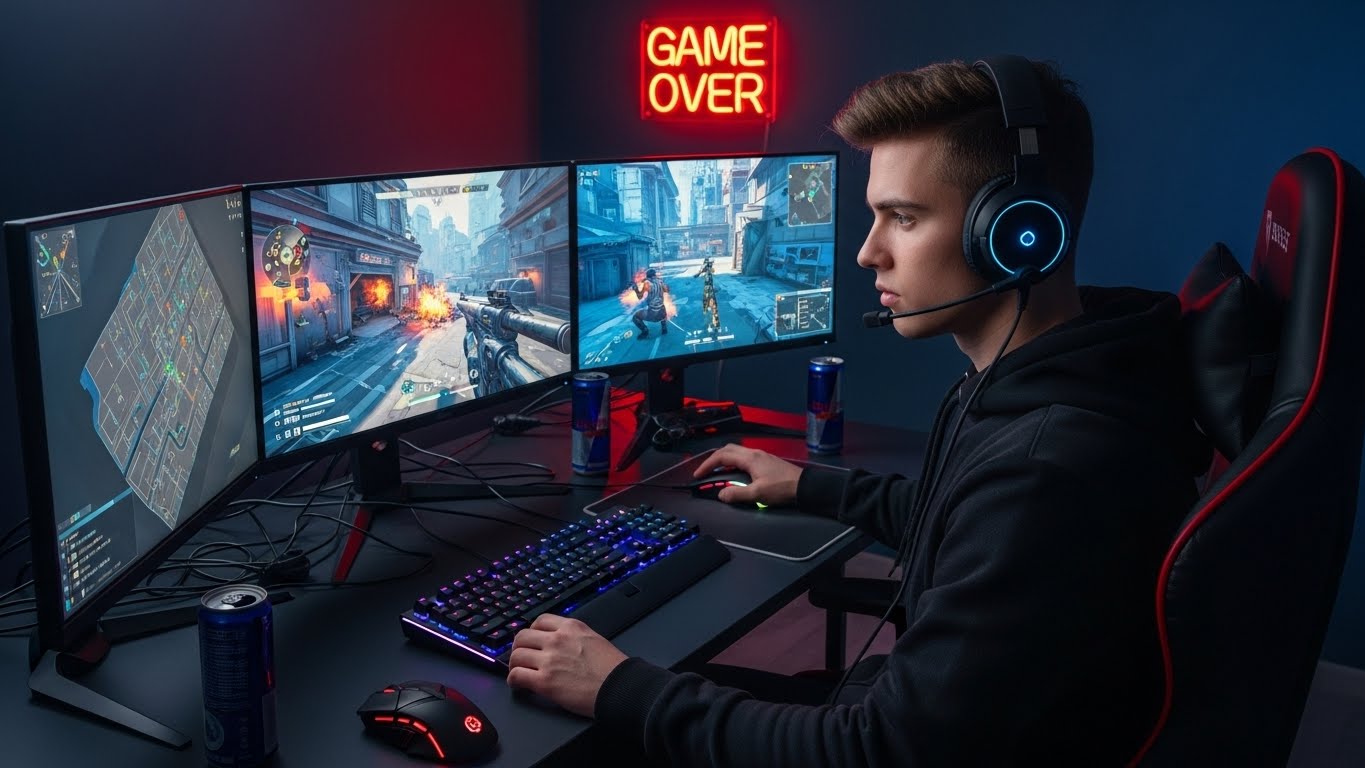

Gaming has transformed from a mere pastime to a global phenomenon that influences technology, culture, and society at large. Over the past few decades, it has evolved in both complexity and immersion. From the days of simple 8-bit graphics to the cutting-edge virtual reality experiences of today, the journey of gaming has been nothing short of extraordinary.
The Early Days of Gaming: The Birth of Video Games
In the late 20th century, gaming began as a basic form of entertainment, with arcade games like Pong and Space Invaders leading the charge. These games were relatively simple, both in terms of gameplay and graphics, yet they managed to captivate players with their addictive nature and challenging mechanics.
The earliest video games were largely based on two primary categories: arcade games and home console games. These games relied on basic mechanics like controlling a character or object within a limited space and responding to player inputs. The graphics were minimal, usually made up of rudimentary geometric shapes like squares and circles.
The Rise of Console Gaming
The 1980s witnessed the introduction of home consoles, which brought gaming directly into the living rooms of families around the world. The Atari 2600 was one of the first successful home consoles, allowing players to experience the excitement of arcade games from the comfort of their own homes. Shortly after, the Nintendo Entertainment System (NES) revolutionized the gaming world with classic titles like Super Mario Bros. and The Legend of Zelda, which not only offered more detailed graphics but also intricate, engaging gameplay.
As the technology behind home consoles improved, developers began pushing the boundaries of what was possible. Games like Final Fantasy VII and Super Mario 64 raised the bar for storytelling, character development, and the use of 3D graphics. These titles helped to cement the importance of console gaming and laid the groundwork for the immersive experiences we know today.
The Emergence of PC Gaming
While consoles dominated the market in terms of accessibility and convenience, PC gaming offered a different experience. With the ability to upgrade hardware and run more powerful software, personal computers gave players access to more detailed graphics and larger, more expansive worlds. The 1990s and early 2000s saw the rise of critically acclaimed titles like Doom, Warcraft, StarCraft, and Half-Life, which became iconic in their own right.
PC gaming provided a platform for many genres to flourish, including real-time strategy (RTS), first-person shooters (FPS), and massively multiplayer online games (MMOs). These games not only featured deeper mechanics but also allowed for more social interaction. Games like World of Warcraft allowed players to connect with others around the world in shared virtual spaces, creating online communities that continue to thrive today.
The Shift to 3D and the Expansion of Game Worlds
The transition from 2D to 3D graphics marked a major turning point in the history of gaming. As gaming consoles and PCs became more powerful, developers started to experiment with three-dimensional worlds that were far more immersive than the flat, pixelated environments of earlier games. This shift was particularly evident in platformers and open-world games.
Games like Super Mario 64 and The Legend of Zelda: Ocarina of Time took advantage of 3D environments, offering players freedom and a sense of exploration that was previously unheard of. These games allowed players to interact with fully realized worlds, with complex systems, dynamic weather, and diverse landscapes. This opened the door for even more ambitious projects in the years to come.
The Birth of Online Gaming
While gaming had always been a solitary or local experience for most players, the introduction of online multiplayer games in the late 1990s changed everything. Quake and Unreal Tournament brought competitive multiplayer gameplay to a global audience, allowing players to battle against each other over the internet in real-time.
Soon after, massively multiplayer online role-playing games (MMORPGs) became the next big thing. EverQuest and World of Warcraft ushered in a new era of gaming where thousands of players could interact in a single, persistent virtual world. These games became cultural touchstones, with millions of players dedicating hours of their lives to exploring digital worlds, leveling up characters, and forging friendships with others.
The Mobile Gaming Revolution
In the mid-2000s, the proliferation of smartphones and tablets introduced a new form of gaming that would change the industry forever: mobile gaming. With the launch of games like Angry Birds and Candy Crush Saga, gaming was no longer limited to dedicated consoles or PCs. The ease of access, combined with the ever-growing app stores, meant that nearly everyone could engage in gaming, regardless of their platform or gaming experience.
Mobile games offered quick, bite-sized experiences that could be played in short bursts, making them highly addictive and accessible to casual players. As smartphones continued to improve in terms of processing power and graphics, mobile games evolved as well, offering more complex and engaging experiences, including multiplayer titles like Clash of Clans and PUBG Mobile.
The Era of Streaming and Digital Distribution
As the gaming landscape evolved, so did the ways in which games were distributed and played. Digital distribution platforms like Steam, PlayStation Network, and Xbox Live allowed gamers to purchase, download, and play games without needing physical copies. This marked the decline of traditional brick-and-mortar stores, shifting the focus to digital content delivery.
Alongside this shift in distribution, gaming started to enter the realm of live streaming. Platforms like Twitch and YouTube Gaming have allowed gamers to broadcast their gameplay to millions of viewers, creating new career opportunities for professional gamers and streamers. The rise of esports and gaming tournaments has turned competitive gaming into a spectator sport, with massive prize pools and global audiences.
Virtual Reality and Augmented Reality: The Future of Gaming
As of the 2020s, gaming is entering the next frontier: virtual and augmented reality. Devices like the Oculus Rift, PlayStation VR, and HTC Vive are providing players with fully immersive, 360-degree experiences that transport them directly into digital worlds. Virtual reality offers players the opportunity to physically move and interact within these environments, adding a level of immersion that traditional gaming could not achieve.
Augmented reality (AR), on the other hand, blends the digital world with the real world, allowing players to interact with both simultaneously. Games like Pokémon GO demonstrated the potential of AR, bringing gaming into the physical world and encouraging players to explore their surroundings in new ways. As AR and VR technology continues to improve, the line between the real and virtual worlds will continue to blur.
The Impact of Gaming on Society and Culture
Gaming has had a profound impact on society and culture. It has become more than just a form of entertainment; it has evolved into a social experience that brings people together. Online multiplayer games, streaming platforms, and esports have created new forms of community, where players from all over the world can connect, collaborate, and compete.
Gaming has also made its mark in the world of art and storytelling. Games like The Last of Us and Red Dead Redemption 2 have demonstrated that video games can be powerful vehicles for storytelling, capable of conveying deep, emotional narratives that rival those of movies and literature.
Furthermore, the gaming industry has become a multi-billion-dollar business, with large corporations like Sony, Microsoft, and Nintendo leading the charge. The economic impact of gaming cannot be overstated, as it generates jobs, fuels technological innovation, and drives major cultural trends.
The Challenges and Controversies Surrounding Gaming
Despite its many positive contributions, the gaming industry has not been without its controversies. Issues like violence in video games, addiction, and the impact of gaming on mental health have sparked debates and led to calls for regulation. Games with violent content, such as Grand Theft Auto and Call of Duty, have often been blamed for encouraging aggressive behavior, despite the lack of conclusive evidence linking video games to real-world violence.
There is also the issue of loot boxes and microtransactions, which have become increasingly prevalent in many modern games. These systems, which allow players to spend real money to unlock in-game items, have been criticized for promoting gambling-like behavior and negatively impacting the gaming experience.
In addition, there are concerns about the treatment of women and marginalized groups within the gaming community. The gaming industry, like many other fields, has struggled with issues related to diversity and inclusion. However, recent efforts to create more inclusive games and promote diverse representation have started to make a difference.
Conclusion: The Future of Gaming
As gaming continues to evolve, it is clear that it will remain a dominant force in entertainment and culture for years to come. From its humble beginnings in arcades and living rooms to the immersive virtual worlds of today, gaming has undergone a remarkable transformation. The rise of VR and AR, the expansion of esports, and the continued innovation in game design all point to an exciting future for the industry.
Ultimately, gaming is more than just a hobby—it is a global movement that brings people together, fosters creativity, and challenges our understanding of what is possible in entertainment. Whether you’re a casual player or a hardcore enthusiast, the future of gaming holds endless possibilities for exploration, excitement, and innovation.