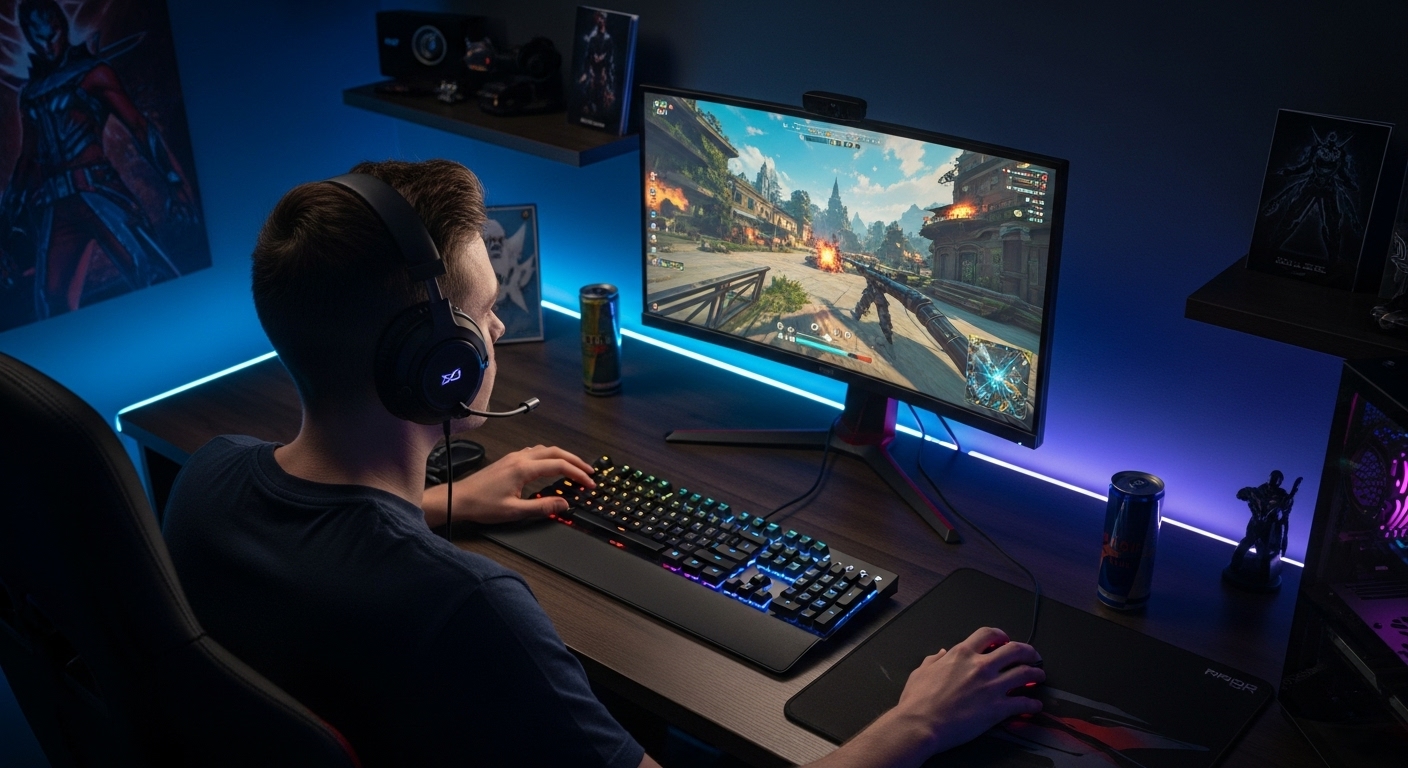
Gaming has transformed from a niche hobby into a global cultural phenomenon. From the early days of pixelated graphics to the stunningly immersive worlds of today, the gaming landscape has evolved in ways that have shaped both technology and entertainment. What started as simple arcade machines has grown into a billion-dollar industry that touches everything from esports to virtual reality. But how did we get here, and where is the world of gaming headed next? In this blog post, we’ll explore the journey of gaming, its current innovations, and what lies ahead in the world of interactive entertainment.
The Early Days: The Birth of Gaming
To truly understand the evolution of gaming, we must first look at its beginnings. The 1970s marked the dawn of video gaming with arcade machines like Pong (1972) and Space Invaders (1978). These early games were simple by today’s standards, featuring basic graphics and straightforward mechanics. Despite their simplicity, they laid the groundwork for what would become an entertainment revolution.
The 1980s saw the emergence of home consoles, with the Atari 2600 leading the way. This allowed players to enjoy video games in the comfort of their homes, making gaming a more accessible activity. This period also saw the rise of Nintendo, which introduced the Nintendo Entertainment System (NES) and franchises like Super Mario Bros. and The Legend of Zelda, which remain iconic to this day. The 1980s and early 1990s represented a golden age where gaming was cemented as a part of mainstream culture.
The 3D Revolution: A New Era for Gaming
The mid-1990s marked a turning point for gaming, as consoles and PCs began to embrace 3D graphics. The Sony PlayStation, released in 1994, and the Nintendo 64 in 1996, brought games to life in ways that had never been seen before. Titles like Super Mario 64, Gran Turismo, and Final Fantasy VII introduced vast 3D worlds, intricate storylines, and highly detailed environments.
The shift to 3D gameplay fundamentally changed how players interacted with games. It wasn’t just about winning or losing anymore; it was about exploring massive, open worlds, solving complex puzzles, and getting lost in detailed narratives. This era paved the way for a generation of gamers who were accustomed to expansive gameplay experiences, and set the stage for the open-world games and massive multiplayer experiences that would follow in later years.
The Rise of Online Multiplayer: Gaming Gets Social
In the early 2000s, gaming entered a new phase with the advent of online multiplayer experiences. The rise of broadband internet and consoles like the Xbox and PlayStation 2 allowed players to connect with one another and compete or cooperate in real-time across vast virtual worlds. Games like Halo 2, World of Warcraft, and Call of Duty reshaped the way people experienced gaming, turning it into a highly social activity.
Online gaming introduced the concept of global communities, where players could form friendships, join clans, and participate in massive, worldwide competitions. It wasn’t just about playing the game anymore; it was about interacting with other players, communicating via headsets, and building digital identities. This online shift also gave birth to the esports industry, where professional players and teams competed for fame and large cash prizes in games like League of Legends, Dota 2, and Fortnite.
The Mobile Revolution: Gaming in Your Pocket
With the launch of the iPhone in 2007, mobile gaming became a game-changer. Suddenly, everyone had a powerful gaming device in their pocket. The rise of smartphones brought gaming to a broader audience, allowing people to play casually anywhere, anytime. Games like Angry Birds, Candy Crush Saga, and Clash of Clans introduced millions of players to the world of gaming, some of whom had never picked up a console or a PC before.
Mobile gaming also brought about a new style of gaming, one that is often more accessible and based on short bursts of play. While many mobile games were simple, their addictive mechanics and free-to-play models with in-app purchases turned gaming into an activity that could be enjoyed in brief, enjoyable sessions throughout the day. The accessibility and convenience of mobile gaming changed the perception of what it meant to be a gamer, making it a ubiquitous part of modern life.
Virtual Reality and Augmented Reality: Gaming Beyond the Screen
Virtual reality (VR) and augmented reality (AR) have emerged as the next frontier in gaming, offering players completely new ways to experience their favorite games. VR headsets, such as the Oculus Rift, HTC Vive, and PlayStation VR, provide an immersive experience that makes players feel like they are actually inside the game world. With 360-degree environments, realistic motion tracking, and sensory feedback, VR gaming allows players to interact with virtual worlds in ways that were previously unimaginable.
AR, on the other hand, overlays digital elements onto the real world. Pokémon GO became a cultural phenomenon by combining real-world exploration with digital gameplay, encouraging millions of players to get outside and catch virtual Pokémon using their smartphones. While VR offers a fully immersive experience, AR allows players to engage with both the digital and physical worlds simultaneously, creating exciting possibilities for interactive gaming experiences.
Both VR and AR represent the future of gaming, with developers pushing the boundaries of what’s possible to make the experience even more lifelike and interactive. As hardware improves and software develops, we’re likely to see even more engaging and immersive gaming experiences that take us deeper into the digital realm.
The Future of Gaming: What’s Next?
The future of gaming is incredibly bright, with countless new technologies set to change the way we play and experience games. Cloud gaming, for example, allows players to stream games directly from the internet without the need for powerful consoles or PCs. This could democratize gaming by making high-quality games more accessible to a broader audience. With services like Google Stadia, Xbox Cloud Gaming, and NVIDIA GeForce Now, it’s possible to play graphically intensive games on low-end devices, as long as you have a reliable internet connection.
Another exciting development is the continued advancement of artificial intelligence (AI) in gaming. AI is already being used to create more dynamic, reactive game worlds, but the future holds even more possibilities. We could see fully AI-driven characters that learn and adapt to player behavior, creating personalized and ever-evolving experiences.
Additionally, the rise of procedural generation and user-generated content may lead to endless gaming possibilities. Games like Minecraft and No Man’s Sky have shown us the potential of worlds that can be procedurally generated, offering virtually infinite exploration. As technology advances, it’s likely that gaming will continue to evolve into even more expansive and interactive experiences.
Conclusion: Gaming as a Universal Language
From the pixelated screens of the early days to the high-definition, fully immersive worlds of today, gaming has transformed into a universal form of entertainment. It has become a cultural phenomenon that spans generations and borders, connecting people from all walks of life. Whether it’s a solo adventure, an online battle, or a shared experience with friends, gaming provides a unique and powerful medium for interaction and creativity.
As technology continues to evolve, so too will gaming. The future is filled with promise, from virtual reality and augmented reality to artificial intelligence and cloud gaming. One thing is certain: the world of gaming is not just a form of entertainment—it’s an ever-expanding universe that will continue to inspire, challenge, and connect players for years to come.