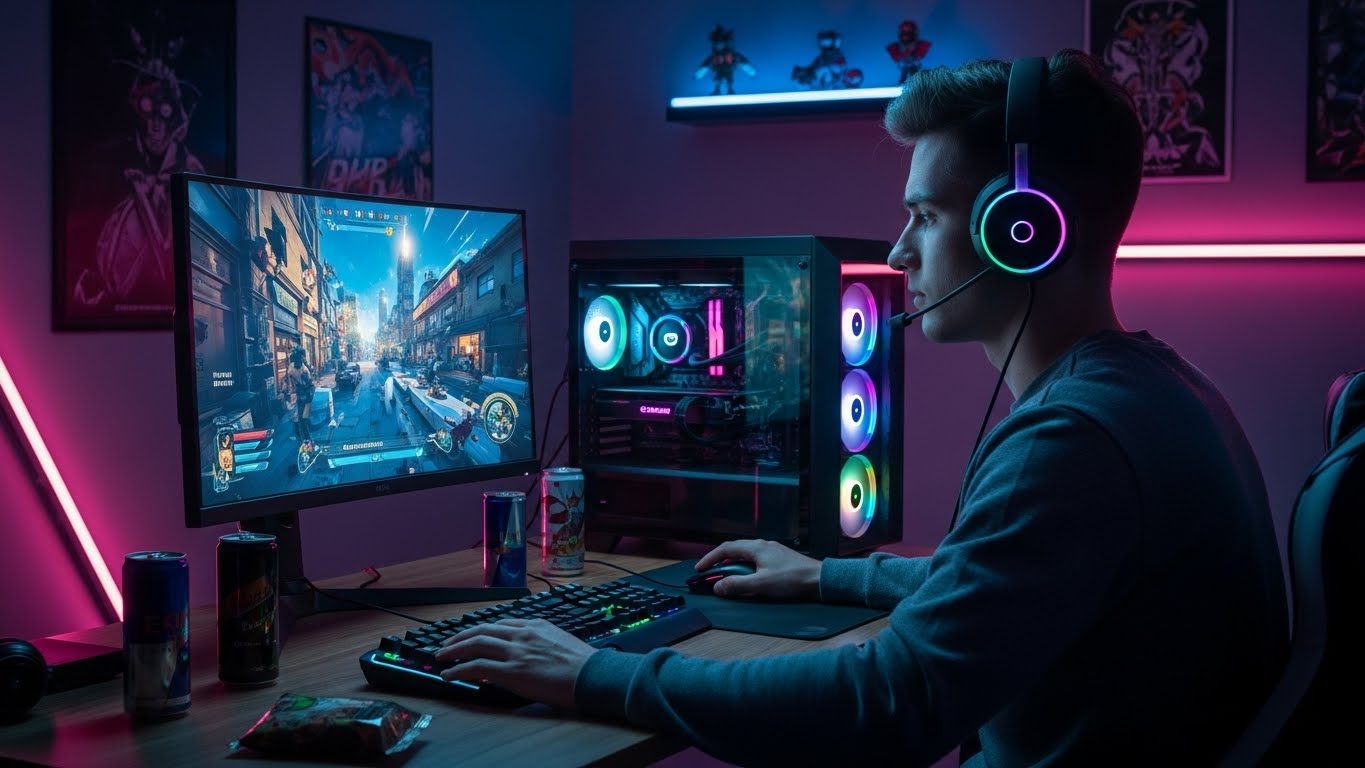
In the ever-evolving world of gaming, the hardware you choose can significantly impact your overall experience. Whether you’re an aspiring professional eSports player, a casual gamer, or someone who just enjoys the immersive experience of modern video games, the right gaming hardware can make all the difference. But with so many options on the market, the question remains: What gaming hardware is actually worth your money?
This blog post aims to break down the key components that contribute to a top-tier gaming experience and guide you through what to consider when purchasing your gaming gear. From graphics cards to monitors, gaming peripherals, and even entire systems, we’ll cover what’s truly worth investing in and what’s better off left on the shelf.
The Core Components of a Gaming Setup
When thinking about building or upgrading a gaming setup, there are a few essential components that you need to focus on. These are the building blocks that determine your gaming experience and should be prioritized based on your budget and gaming needs.
1. The Central Processing Unit (CPU)
The CPU is the heart of your gaming PC. It processes all the instructions from the software, and its performance directly impacts the overall speed and responsiveness of your system. If you plan on running demanding games or using your PC for multiple tasks (like streaming or video editing), you’ll want a powerful CPU.
What’s worth your money?
- Intel Core i9 or AMD Ryzen 9: These are among the best options for high-end gaming and multitasking. Both offer excellent performance, with Intel providing high clock speeds and AMD offering more cores for multitasking.
- Intel Core i7 or AMD Ryzen 7: If you’re on a budget but still want solid performance, these are great mid-range choices. They strike a balance between price and performance and will handle most modern games at high settings without breaking a sweat.
Why invest here?
The CPU is a critical part of your gaming experience. While it may not directly affect graphics quality, its performance influences load times, game smoothness, and the overall capability of your system to handle modern games at a competitive level.
2. The Graphics Processing Unit (GPU)
The GPU is arguably the most important piece of hardware for a gamer. It renders the graphics you see on your screen, and a powerful GPU ensures smooth frame rates and beautiful visual fidelity in games. A top-tier GPU is essential if you’re gaming at 1440p or 4K, or if you want to make sure your system is VR-ready.
What’s worth your money?
- NVIDIA GeForce RTX 3000 or 4000 series: The RTX 3080, 3090, and 4090 are excellent choices for gamers looking to push the limits of 4K gaming, ray tracing, and high frame rates. They come with cutting-edge features like DLSS (Deep Learning Super Sampling) that improve performance without sacrificing visual quality.
- AMD Radeon RX 6000 series: AMD offers solid performance with their RX 6900 XT and RX 6800 XT, which are competitive with NVIDIA’s high-end offerings. These cards are great for gamers who want excellent performance at a lower price than NVIDIA’s equivalent models.
Why invest here?
If you plan on gaming at high resolutions (1440p or 4K) or want to experience the best in graphical fidelity with features like ray tracing, a high-quality GPU is a must. Don’t skimp on this component if you’re looking for a long-term, high-end gaming setup.
3. Memory (RAM)
Random Access Memory (RAM) is where your system stores data that’s actively being used. In gaming, having enough RAM ensures smooth multitasking, fast load times, and the ability to run modern games without lagging.
What’s worth your money?
- 16GB of DDR4 RAM: This is generally the sweet spot for gaming in 2025. It’s enough for gaming, streaming, and multitasking. Unless you’re doing content creation, 16GB will serve you well.
- 32GB of DDR4 RAM: If you’re an enthusiast or if you plan to use your system for video editing, 3D rendering, or running virtual machines alongside gaming, upgrading to 32GB can provide added headroom.
Why invest here?
While RAM may not directly improve graphics, it ensures that your system runs efficiently without stuttering. Opting for faster speeds and adequate capacity (16GB or more) ensures smooth, uninterrupted gaming experiences.
4. Storage: SSD vs. HDD
When it comes to storage, speed and capacity are the two most important considerations. An SSD (Solid-State Drive) is far faster than a traditional HDD (Hard Disk Drive), leading to faster load times and improved system responsiveness.
What’s worth your money?
- NVMe SSD: These are the fastest storage devices available. If you’re serious about reducing loading times and ensuring smooth system performance, a high-speed NVMe SSD (at least 500GB to 1TB) should be your go-to option.
- Additional HDD for storage: If you have a lot of games or media to store, a secondary HDD (2TB or more) offers a cost-effective solution for additional space. You don’t need to install games on an HDD, but it’s great for media storage.
Why invest here?
A good SSD drastically reduces game load times, Windows startup times, and ensures smoother system performance. The speed advantage is undeniable, especially for modern games with huge file sizes. A secondary HDD is good for mass storage if you don’t mind the slower speeds.
Gaming Peripherals That Enhance Your Experience
Once you’ve built or purchased your gaming rig, it’s time to consider the peripherals that will help you get the most out of your hardware. These devices include your monitor, keyboard, mouse, headset, and other accessories that affect your gaming experience.
5. The Monitor: A Gateway to High-Quality Gaming
Your monitor is your primary visual interface with the game world. The quality of the monitor can make a huge difference in your gaming experience, from the resolution to the refresh rate and response time.
What’s worth your money?
- 144Hz – 240Hz Refresh Rate: A higher refresh rate means smoother motion and less blur. For competitive gamers, especially in fast-paced FPS or eSports games, a 240Hz monitor is ideal. For more casual gamers, a 144Hz refresh rate will still offer a significant improvement over standard 60Hz displays.
- 1440p or 4K Resolution: 1440p (2K) is the sweet spot for gaming in 2025, balancing visual clarity and performance. If your GPU can handle it, consider upgrading to a 4K monitor, but keep in mind that you’ll need a high-end GPU to drive 4K gaming at high frame rates.
- IPS Panel: If color accuracy and viewing angles matter to you (especially for single-player, narrative-driven games), go for an IPS panel, which offers better color reproduction and wider viewing angles than TN panels.
Why invest here?
A high-refresh-rate monitor with great resolution will provide a much more fluid, immersive experience. Whether you’re playing fast-paced shooters or exploring open-world games, the visual experience can make or break the immersion.
6. The Keyboard and Mouse: Precision Matters
For a seamless gaming experience, your keyboard and mouse need to be responsive, comfortable, and durable. Whether you’re playing a strategy game, FPS, or RPG, the right peripherals can give you the edge.
What’s worth your money?
- Mechanical Keyboards: Mechanical switches are preferred by gamers for their tactile feel and responsiveness. Keyboards like the Corsair K95 or Razer Huntsman Elite are equipped with Cherry MX or optical switches, offering speed and precision.
- Gaming Mice with Adjustable DPI: Look for a mouse with adjustable DPI (dots per inch) settings. Gaming mice such as the Logitech G Pro X or Razer DeathAdder Elite allow for precise movement and have customizable buttons that are essential for gaming.
Why invest here?
Your mouse and keyboard are the direct interfaces between you and the game, so precision and responsiveness matter. High-quality peripherals not only improve gameplay but also enhance comfort during long gaming sessions.
7. The Headset: Immersion and Communication
Sound plays a pivotal role in gaming, whether you’re listening for distant footsteps in a shooter or enjoying a rich soundscape in an RPG. A good headset improves immersion and ensures clear communication with teammates in multiplayer games.
What’s worth your money?
- Surround Sound Headsets: Headsets like the SteelSeries Arctis Pro or the Logitech G Pro X provide excellent sound quality and simulated surround sound, giving you a competitive edge in multiplayer games.
- Wireless Options: If you prefer mobility, wireless gaming headsets like the Corsair HS70 or the Razer Nari Ultimate offer great sound quality without the hassle of tangled wires.
Why invest here?
A high-quality gaming headset enhances immersion, clarity, and communication, making it an essential tool for multiplayer gamers and those who want a more immersive single-player experience.
Conclusion: Building a Gaming Setup That’s Worth Your Money
When it comes to gaming hardware, the “best” choices ultimately depend on your specific needs, budget, and preferences. The key takeaway is that investing in the right core components, such as a powerful CPU and GPU, along with quality peripherals, will ensure that you get the most out of your gaming setup.
Focus on getting the best GPU you can afford, followed by a high-quality monitor, and complement your system with peripherals that match your style of play. Remember that future-proofing your setup is important—gaming technology advances quickly, and investing a little more now can save you from having