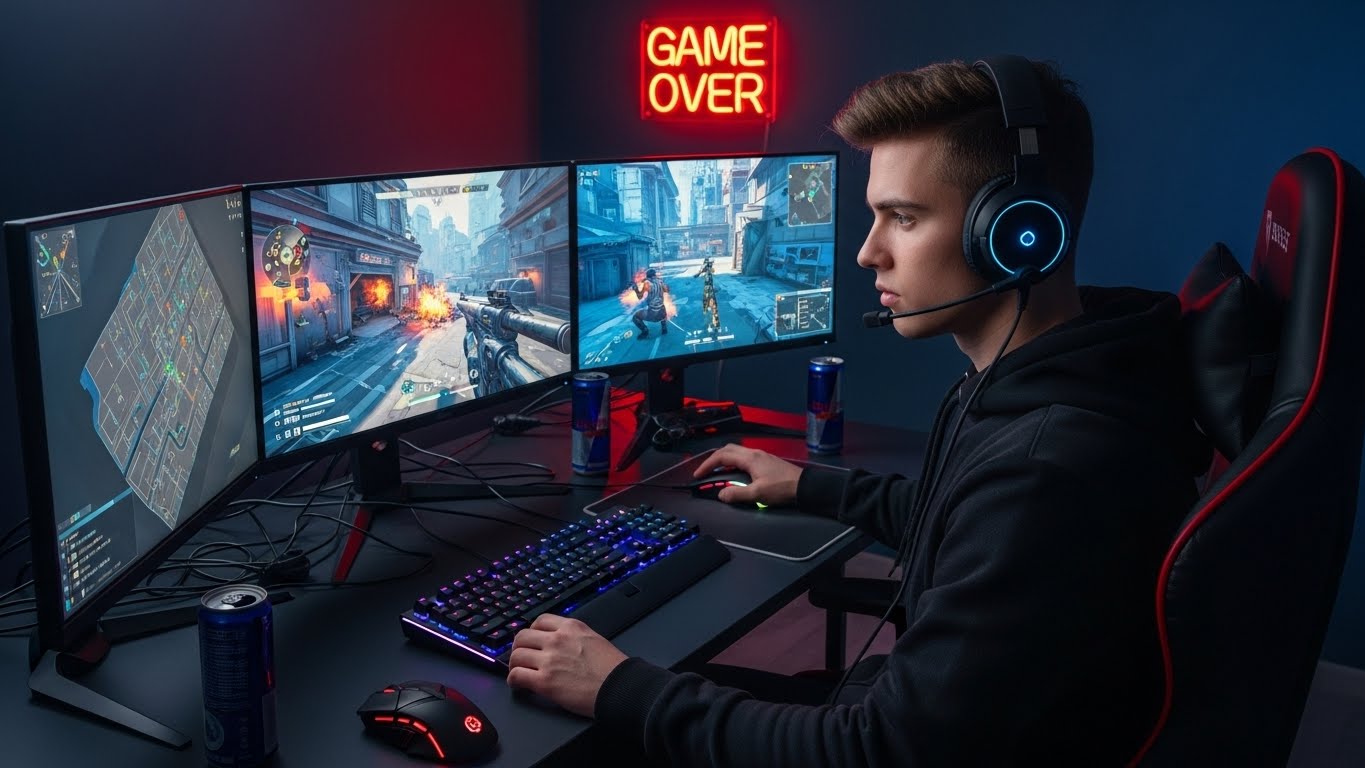

Gaming has transformed from a niche hobby into one of the most influential entertainment industries worldwide. Once considered a pastime for a select few, gaming has permeated almost every corner of our lives. Whether you’re a casual gamer, a competitive eSports player, or someone who simply enjoys immersing themselves in fantastical worlds, the evolution of gaming has touched us all. In this blog post, we’ll take a deep dive into the history, impact, and future of gaming. From the humble beginnings of pixelated screens to the immersive realms of virtual reality, the gaming landscape has undergone a monumental shift.
The Humble Beginnings: A Look Back at the Early Days of Gaming
In the early days of video games, technology was in its infancy. Games like Pong, created by Atari in 1972, offered players a simplistic ping-pong experience on a black-and-white screen. These primitive games were not about high-quality graphics or deep storytelling; instead, they focused on creating an interactive experience that was novel at the time. In the late 1970s and early 1980s, arcade games like Space Invaders and Pac-Man became cultural phenomena, drawing crowds into arcades and fueling the early gaming culture.
The 1980s also saw the emergence of home consoles. Systems like the Nintendo Entertainment System (NES) revolutionized gaming, bringing video games into people’s living rooms. Games such as Super Mario Bros. and The Legend of Zelda defined an era and set the standard for generations of games to come. These early experiences, although limited by technology, laid the foundation for what gaming would become in the years ahead.
The Rise of 3D Graphics: A Game-Changer for the Industry
Fast forward to the 1990s, and the gaming world was beginning to undergo a radical transformation. The introduction of 3D graphics took gaming to new heights, pushing the boundaries of what was possible in terms of both visuals and gameplay. The Sony PlayStation, released in 1994, marked the beginning of a new era in gaming. Titles like Final Fantasy VII, Gran Turismo, and Crash Bandicoot were now bringing players into fully realized, three-dimensional worlds.
With the advent of 3D graphics, developers were able to create more intricate environments and characters. Games like Super Mario 64 not only introduced groundbreaking 3D gameplay but also laid the foundation for future platformers. The Legend of Zelda: Ocarina of Time, released in 1998, is still considered one of the greatest video games of all time, thanks in large part to its open-world exploration, immersive storytelling, and advanced gameplay mechanics.
During this period, the gaming industry also saw the rise of online multiplayer games. The PC gaming market began to thrive with titles like Warcraft, Quake, and StarCraft, which allowed players to battle each other over the internet. The emergence of LAN parties and internet cafes was a testament to the growing social aspect of gaming. For the first time, players could experience games together, regardless of their physical location.
The Modern Age: Realism, Open Worlds, and Gaming as a Cultural Force
As the 2000s rolled in, gaming began to shed its former image as a niche hobby and became a cultural juggernaut. The Xbox 360 and PlayStation 3 marked the beginning of high-definition graphics, while consoles like the Nintendo Wii introduced motion-sensing technology, broadening the appeal of gaming to families and casual players. The line between “hardcore” gamers and casual gamers began to blur as consoles and games became more accessible to a wider audience.
The 2000s also saw a significant rise in the importance of online multiplayer gaming. World of Warcraft, Halo 2, and Call of Duty took online gaming to unprecedented levels, with players now spending hours, sometimes days, in virtual worlds or competing against others in fast-paced shooters. The rise of eSports also became a major development during this time, as competitive gaming began to draw massive audiences both online and in live arenas. Games like League of Legends and Counter-Strike became global phenomena, cementing gaming as a legitimate sport and entertainment medium.
At the same time, open-world games began to dominate the gaming landscape. Titles like Grand Theft Auto: San Andreas, The Elder Scrolls V: Skyrim, and Red Dead Redemption offered players vast, explorable environments that encouraged creativity and freedom. The ability to explore detailed worlds at your own pace, interact with NPCs, and follow various questlines revolutionized the gaming experience. These titles not only allowed for freedom of movement but also gave players the agency to shape the world around them, leading to an evolution in storytelling and player choice.
The Influence of Mobile Gaming and the App Revolution
The rise of smartphones in the 2010s brought about a major shift in the gaming industry. With millions of people now carrying powerful computers in their pockets, mobile gaming surged in popularity. Games like Angry Birds, Clash of Clans, and Candy Crush became household names, making gaming accessible to people who had never considered picking up a console or a PC. The success of these games also led to the development of entire ecosystems around in-app purchases, microtransactions, and social gaming.
Mobile games also started to introduce mechanics like location-based gaming, where players could interact with the real world. Pokémon Go, released in 2016, was a major milestone in this area. By blending augmented reality with a beloved franchise, it became a worldwide phenomenon that had players going outside and interacting with their environment in ways never seen before in gaming. This was just the beginning of a new wave of games that could merge the digital and physical worlds.
Virtual Reality and Augmented Reality: The Future of Gaming
While mobile gaming opened up new possibilities, the future of gaming looks set to be dominated by even more immersive technologies, particularly virtual reality (VR) and augmented reality (AR). VR, with its ability to transport players into entirely new environments, is already having a significant impact on gaming. The release of VR headsets like the Oculus Rift, PlayStation VR, and the HTC Vive has made it possible for gamers to experience games in a way that was once the stuff of science fiction.
Games like Half-Life: Alyx and Beat Saber have demonstrated the potential of VR, offering new ways to interact with virtual worlds and creating experiences that feel far more real than traditional gaming setups. The feeling of immersion that VR provides is unlike anything else, making it one of the most exciting developments in the gaming industry. In addition to VR, AR technologies are also starting to make waves, with games like Pokémon Go continuing to push the boundaries of how games can interact with the real world.
Gaming and Social Connectivity
Another crucial aspect of modern gaming is the social aspect. Games are no longer solitary experiences. Whether through online multiplayer, co-op modes, or game streaming, gaming has become a social experience that connects people across the globe. Platforms like Twitch, YouTube Gaming, and Discord have transformed gaming into a spectator sport, where fans can watch professional players, learn strategies, and engage with communities.
The popularity of streaming and content creation has created a new class of celebrities. Streamers and YouTubers like Ninja, PewDiePie, and Pokimane have millions of followers, earning them a place in mainstream media. These influencers have turned gaming into a cultural phenomenon, further solidifying its place in modern entertainment.
The Future: Cloud Gaming and Artificial Intelligence
Looking ahead, the future of gaming is brighter than ever. One of the most exciting prospects is the rise of cloud gaming, which could eliminate the need for expensive hardware. Services like Google Stadia (though discontinued), Microsoft’s xCloud, and NVIDIA GeForce Now are already providing gamers with the ability to stream high-quality games directly to their devices, no matter where they are. As internet speeds improve and cloud infrastructure becomes more reliable, this model could revolutionize the way we play games.
Moreover, artificial intelligence (AI) is set to play a larger role in gaming. AI is already being used to create smarter NPCs and more dynamic, responsive gameplay. In the future, we could see games that adapt to the player’s behavior and preferences in real-time, creating personalized experiences that feel unique every time you play.
Conclusion: Gaming as a Cultural Mainstay
From its humble beginnings to its current status as a global phenomenon, gaming has undergone an incredible transformation. What was once a simple pastime has become an integral part of modern culture, influencing everything from art and technology to social interaction and sports. As the industry continues to innovate, it’s clear that gaming will remain at the forefront of entertainment for years to come.
Whether you’re a lifelong gamer or someone just starting to explore the world of video games, the future holds endless possibilities. With virtual reality, artificial intelligence, and cloud gaming on the horizon, there’s no telling where the next evolution of gaming will take us. One thing is for sure: the journey has only just begun.